
Science of Water · Research Translation
Blood Flow
Restriction Therapy
Low Load. High Potential.
A cuff and a pool have nothing in common. Yet, both produce the fatigue and the pump that heavy load is supposed to own.
A Short Brief
How BFR Changes
the Muscular Response
The cuff does not change the movement itself. It changes the internal conditions under which the muscle performs it.
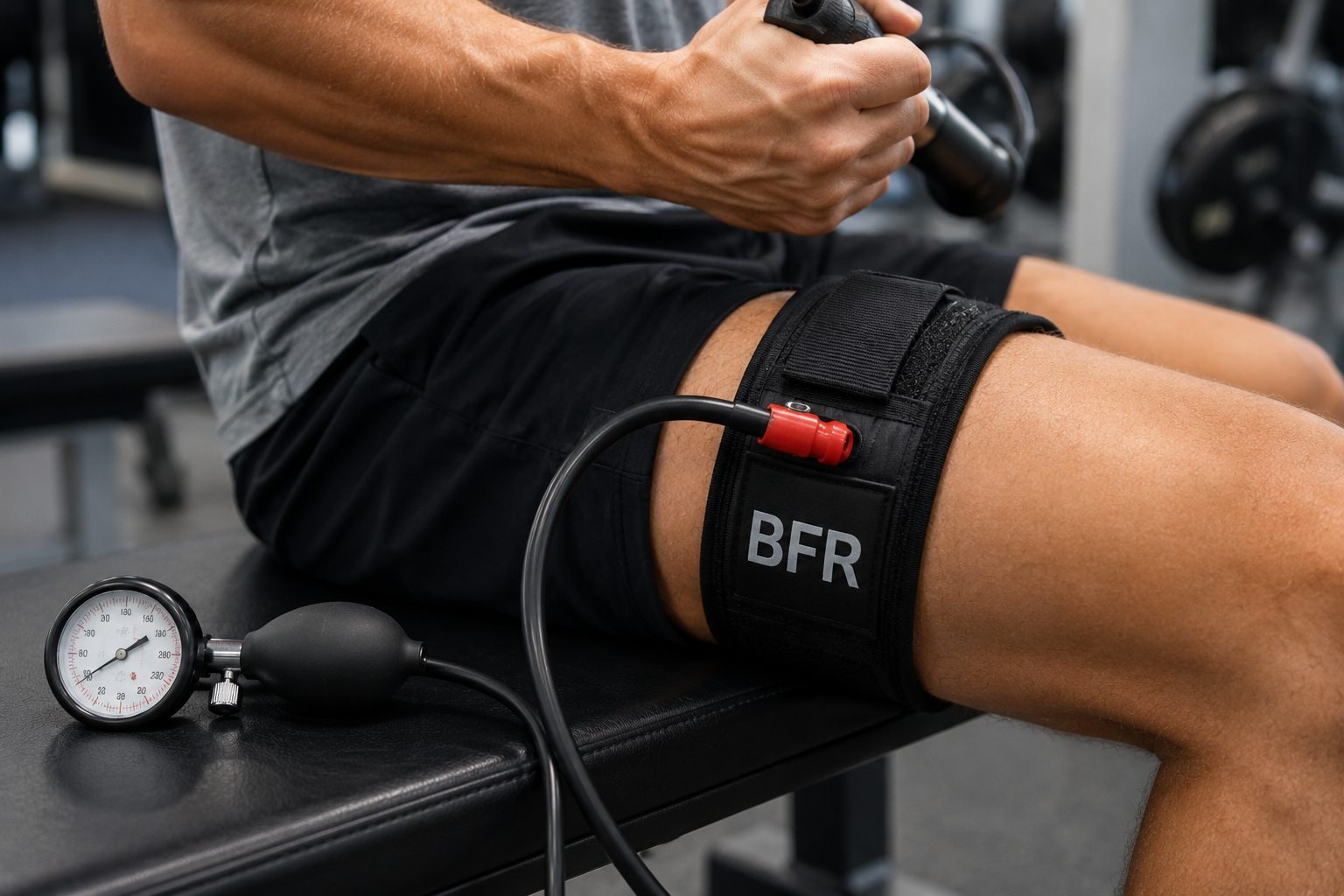
Blood Flow Restriction therapy uses an inflatable cuff around the working limb. It reduces arterial inflow and restricts venous return, lowering oxygen availability and allowing to accumulate as repetitions continue.1
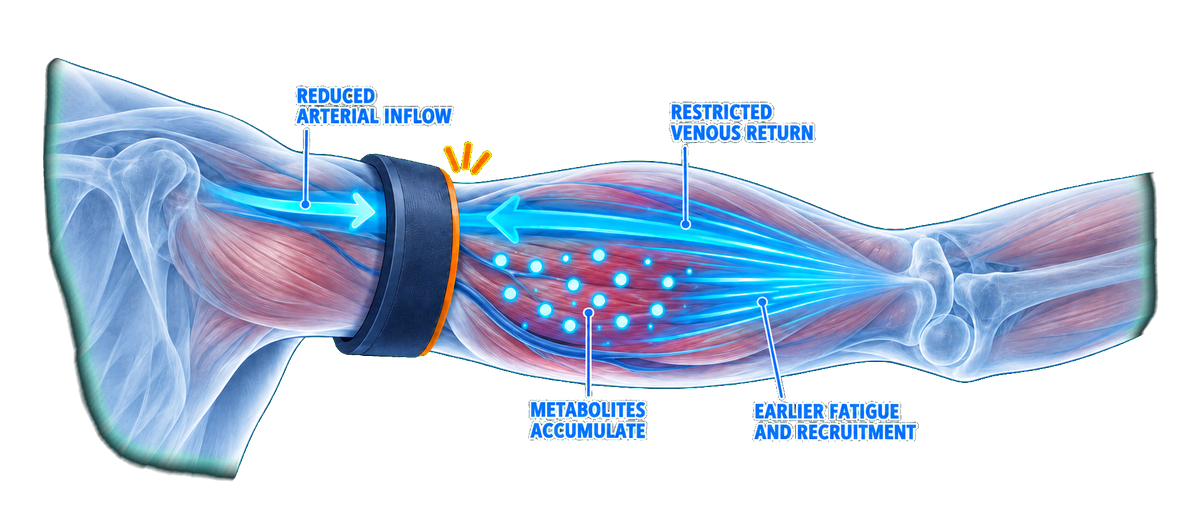
That buildup adds metabolic stress to the exercise. The muscle fatigues sooner and recruits more motor units to maintain force—even with comparatively light resistance.1
Water creates a related physical experience through different mechanisms. Hydrostatic pressure acts throughout immersion, while drag resistance challenges every repetition. In my experience, together they can produce an intense pump and accelerated muscular fatigue—even without a cuff or external weight.
What This Means for AquaFit Sports
Different Mechanisms.
A Shared Lesson.
BFR applies localized restriction. Water provides natural, graded compression—and adds drag to every movement.

Restricted venous return Water Hydrostatic pressure + drag Drag opposes movement Venous return is supported Pressure surrounds the immersed body
Water is not natural BFR. A cuff restricts blood flow locally; hydrostatic pressure provides natural, graded compression across the immersed body while supporting venous return, and drag resists every movement. The mechanisms are different, but each changes the conditions under which muscular work is performed—allowing meaningful demand without relying solely on heavy external load.
One restricts return. The other supports it. Both change how the body experiences the work.
Follow the Flow
The exercise creates the work. The cuff changes what happens between repetitions.
Picture the working muscle as a sink.
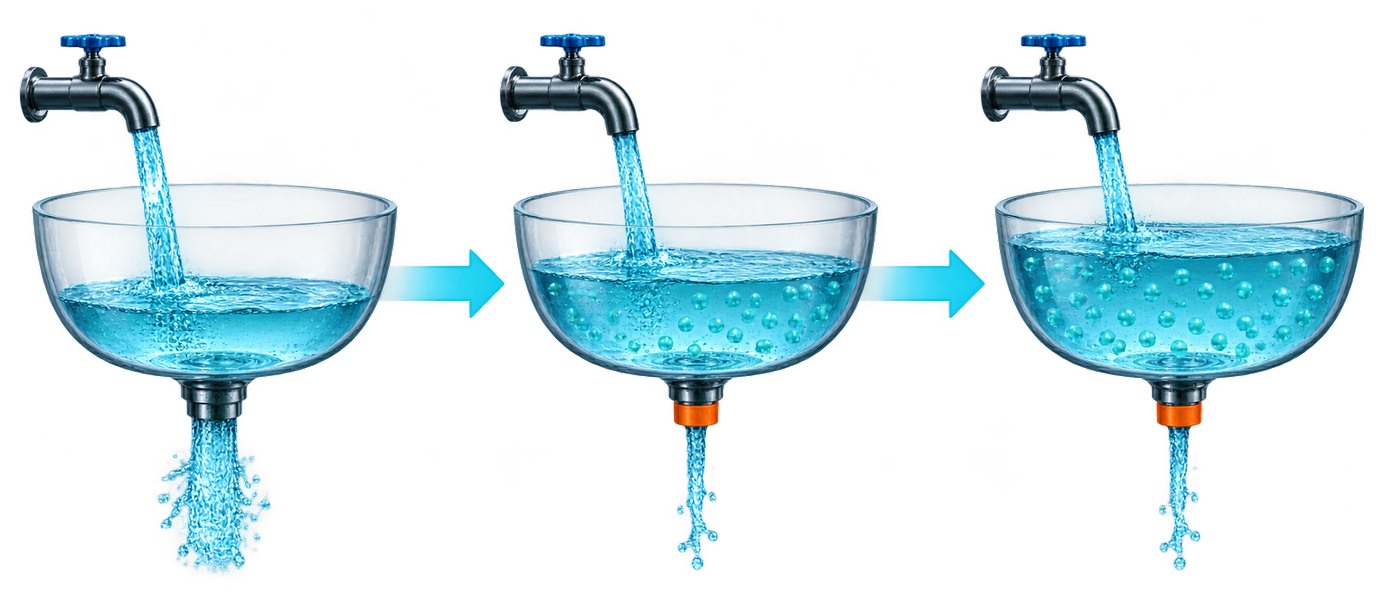
Flow In. Flow Out.
Blood enters the working muscle and returns without external restriction.
Return Slows More.
The cuff reduces inflow, but restricts venous return more.
The Pump Builds.
As repetitions continue, blood and metabolites accumulate, and fatigue arrives sooner.
Founder Field Note
The Pump Is Real
The mechanisms are different. What caught my attention was how familiar the response felt.
When I first heard about BFR, I tried it. I know firsthand the rapid fatigue and unmistakable pump it creates—even when I experimented with it in the water.
But I have also felt a powerful pump in water countless times without a cuff. After one hard set, the next can feel completely different: fatigue arrives sooner even though the resistance comes from drag, not external weight.
BFR reduces arterial inflow and restricts venous return with a cuff.1 Water surrounds the body with hydrostatic pressure while drag challenges the muscle through every repetition and change of direction.2
From my experience, the pump and accelerated fatigue during repeated hard efforts are real.
What science has not yet clearly tested is how hydrostatic pressure, high-speed aquatic resistance, repetition, and short recovery interact to create that response.
That deserves direct study.
The Larger Lesson
BFR changes the mechanism.Water changes the medium.
Neither replaces traditional strength training, and the two should not be confused.
BFR has expanded how clinicians and performance professionals can approach strength development when conventional loading is limited. Water offers its own combination of compression, resistance, buoyancy, turbulence, movement, and recovery.
BFR and water work through different mechanisms. The value is that both challenge the assumption that heavy external load is the only way to create meaningful muscular demand.